ICA

Certificate in Integrated Computer Application and Professional Development

San Institute of Computing > Academics > Academic Programmes > Certificate in Integrated Computer Application and Professional Development
Certificate in Integrated Computer Application and Professional Development
Course ID
ICA
Campus
Iganga
Level
Certificate Programmes, Short Certificate Courses
Duration
4 Months
Time
Day, Evening, Weekend
Method
Lecture, Project, Seminar
Min. Load
18 CUs
Tuition
UGX 450,000

Welcome to our Integrated Computer Application and Professional Development study program, a comprehensive and transformative learning experience designed to equip participants with a diverse skill set essential for success in today’s digital and professional landscape. This program goes beyond traditional courses, offering an integrated approach that combines technical expertise with crucial professional development skills.

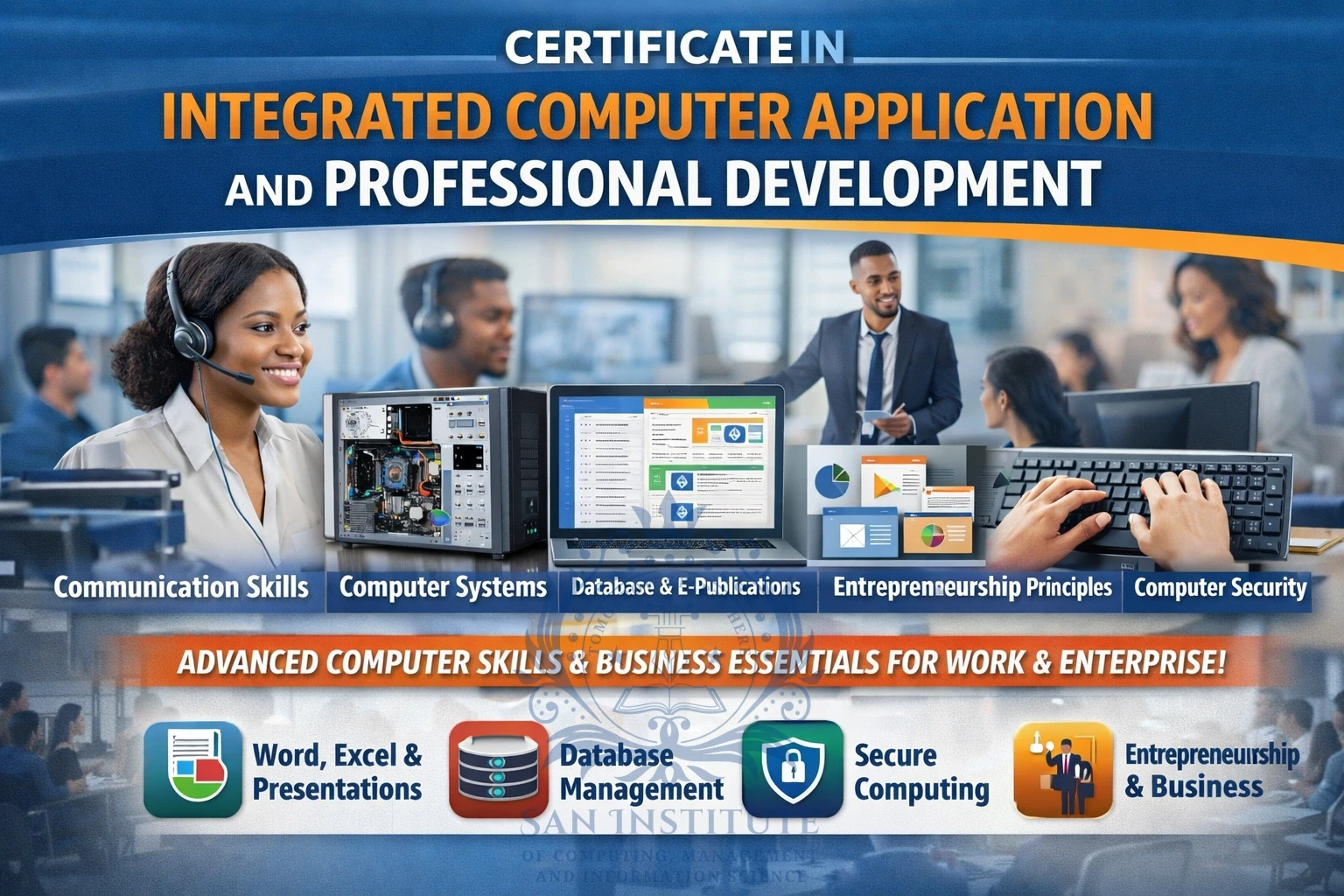
The Integrated Computer Application and Professional Development academic programme is meticulously crafted to provide students with a holistic skill set crucial for navigating today’s digital landscape. Through a blend of theoretical understanding and hands-on practical experience, students will acquire proficiency in a spectrum of computer applications, communication skills, entrepreneurship principles, and fundamental computer systems operations.

This program is thoughtfully designed to cultivate a well-rounded comprehension of technology and its applications in diverse professional settings.

  • Office Administrator
  • Data Entry Specialist
  • Communication Specialist
  • Entrepreneur/Small Business Owner
  • Computer Support Technician
  • Desktop Publisher
  • Database Administrator (Entry Level)
  • Security Analyst (Entry Level)
Apply for Admission

Apply for admission into our Integrated Computer Application and Professional Development programme to start your journey in the field of IT today!

The primary aim of the “Integrated Computer Application and Professional Development” programme is to empower students with the essential skills and knowledge required to proficiently utilize computer applications for personal, academic, and professional purposes.

By seamlessly integrating practical experience with theoretical insights, the program aims to produce graduates who are adept at leveraging technology to enhance productivity, communication, and problem-solving.

Programme Objectives

The specific objectives that ought to be achieved by the end of this study programme include the following:

  • Proficiency in Computer Applications: Develop practical skills in word processing, spreadsheets, presentations, desktop publishing, and databases to enhance document creation, data analysis, and information presentation.

  • Effective Communication: Enhance communication skills by integrating technology, focusing on written and verbal communication in both personal and professional contexts.

  • Entrepreneurship Principles: Instill entrepreneurship principles and business acumen to enable students to identify opportunities, create business plans, and understand the role of technology in entrepreneurial ventures.

  • Computer Systems and Basic Operations: Provide a foundational understanding of computer systems, hardware, and basic operations to ensure a solid grasp of the technology underpinning various applications.

  • Computer Security Basics: Familiarize students with the fundamentals of computer security, including principles of data protection, privacy, and strategies to mitigate cybersecurity risks.

  • Typing Skills: Develop proficient typing skills to enhance overall efficiency and productivity when working with digital documents and applications.

By achieving these objectives, the program aims to produce graduates who are not only proficient in computer applications but are also well-equipped with the interpersonal and strategic skills necessary for success in today’s competitive and rapidly evolving professional landscape.

Entry requirements

To qualify for admission to our Certificate in Integrated Computer Application and Professional Development academic programme, a candidate must have;

  • a Uganda Certificate of Education (UCE) with at least 3 passes obtained at the same sitting or its equivalent.

Course structure and modules

To view the course structure, modules and content, you need to apply for admission first.

How you study

The Integrated Computer Application and Professional Development academic programme has the following study time options:


Day

Evening

Weekend

Career opportunities

Graduates of the Integrated Computer Application and Professional Development study program will be well-prepared for a variety of career paths in the rapidly evolving digital landscape. Potential career opportunities include:

  • Office Administrator: Utilize integrated computer applications for efficient office management, document creation, and data organization.
  • Data Entry Specialist: Apply skills in spreadsheets and databases to enter, manage, and analyze data for organizations.
  • Communication Specialist: Use effective communication skills, both written and verbal, in roles such as customer service, public relations, or marketing.
  • Entrepreneur/Small Business Owner: Apply entrepreneurship principles to start and manage small businesses, leveraging technology for success.
  • Computer Support Technician: Provide basic technical support and troubleshoot computer-related issues for individuals and organizations.
  • Desktop Publisher: Design and produce various publications using integrated desktop publishing tools.
  • Database Administrator (Entry Level): Manage and maintain databases to ensure efficient data storage and retrieval.
  • Security Analyst (Entry Level): Contribute to ensuring the security of computer systems by implementing basic security measures.

The Integrated Computer Application and Professional Development study program sets the stage for a dynamic career by combining technical expertise with essential soft skills, making graduates valuable assets in a wide range of professional environments.


Banking

Economic Policy

Financial Sector Management

Quantitative Finance