DIA

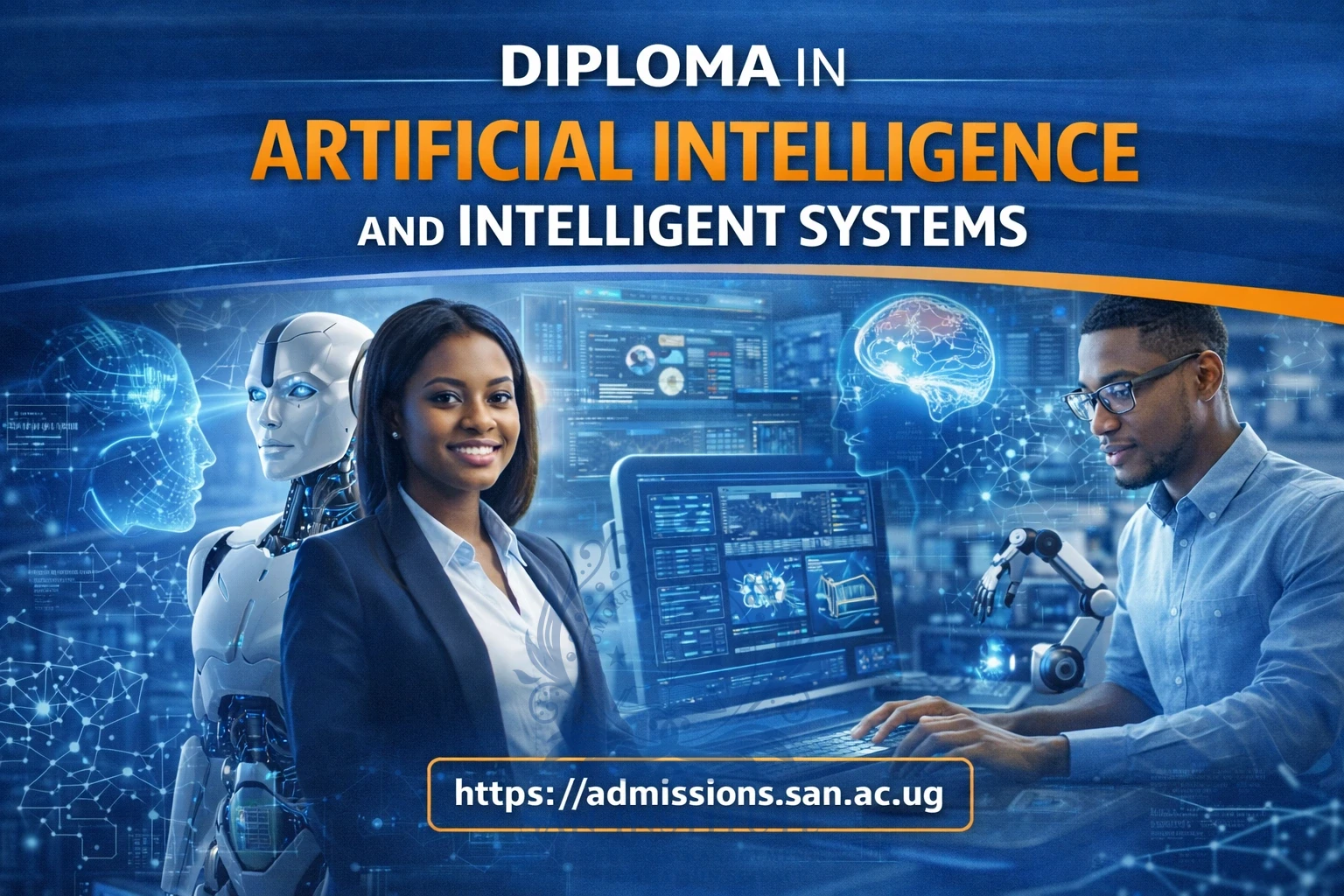
Diploma in Artificial Intelligence & Intelligent Systems

San Institute of Computing > Academics > Academic Programmes > Diploma in Artificial Intelligence & Intelligent Systems
Course ID
DIA
Campus
Iganga
Level
Diploma Programmes
Duration
2 Years
Time
Day, Evening, Weekend
Method
Lecture, Project, Seminar
Min. Load
104 CUs
Tuition
UGX 800,000

The Diploma in Artificial Intelligence and Intelligent Systems is a specialized, application-oriented programme designed to prepare learners for technical roles in the rapidly evolving fields of artificial intelligence (AI), machine learning, and intelligent technologies.

The programme bridges foundational computing knowledge with modern AI techniques to enable learners to design and implement intelligent systems that can analyze data, recognize patterns, and support automated decision-making.

The curriculum integrates core areas such as programming for AI, data structures, statistics for intelligent systems, machine learning fundamentals, intelligent agents, computer vision basics, natural language processing concepts, and AI system implementation. Learners gain practical experience working with AI tools, frameworks, and datasets to develop real-world solutions.

A strong emphasis is placed on problem-solving, data-driven reasoning, and hands-on laboratory practice. Students learn how intelligent systems are applied in domains such as healthcare, finance, agriculture, education, cybersecurity, and smart technologies.

Ethical considerations, responsible AI development, and societal impacts of intelligent systems are also embedded throughout the programme to ensure graduates understand both the power and responsibility associated with AI technologies.

    Apply for Admission

    Apply for admission into our Diploma in Artificial Intelligence and Intelligent Systems programme to start your journey in the field of AI today!

    The programme is structured to develop competencies in:

    • Designing and implementing basic machine learning models
    • Developing simple intelligent applications and automation solutions
    • Processing and analyzing structured and unstructured data
    • Integrating AI components into software and information systems
    • Understanding the operational, ethical, and legal considerations of AI deployment

    Graduates of this programme are prepared for technologist-level roles in AI-assisted system development and data-driven technology environments, as well as for progression to undergraduate studies in Artificial Intelligence, Data Science, Computer Science, or related disciplines.

    Programme Aim

    The primary aim of the Diploma in Artificial Intelligence and Intelligent Systems is to equip learners with strong theoretical foundations and practical technical skills in the design, development, and application of intelligent computational systems that can perceive, learn, reason, and make decisions.

    The programme seeks to produce competent AI technologists capable of developing data-driven solutions, automating processes, and supporting innovation across diverse sectors of the economy.

    Programme Objectives

    The specific objectives of the Diploma in Artificial Intelligence and Intelligent Systems programme are to:

    • Provide learners with strong foundational knowledge in artificial intelligence, data analysis, and intelligent system design.
    • Develop practical skills in programming, data handling, and the implementation of machine learning techniques.
    • Equip learners with the ability to design and deploy basic intelligent applications that solve real-world problems.
    • Introduce learners to emerging AI technologies such as computer vision, natural language processing, and intelligent automation.
    • Promote analytical thinking, innovation, and data-driven decision-making skills.
    • Foster awareness of ethical, legal, and societal implications of artificial intelligence.
    • Prepare graduates for employment as AI technologists or for further academic progression in AI-related disciplines.

    Learning Outcomes

    Upon successful completion of the programme, the learner should be able to:

    Knowledge-Based Outcomes

    1. Explain core concepts, terminology, and principles of artificial intelligence and intelligent systems.
    2. Describe fundamental machine learning approaches and data analysis techniques.
    3. Identify key AI application areas, tools, and frameworks used in intelligent system development.
    4. Explain ethical, legal, and social considerations associated with AI technologies.

    Practical / Technical Skills

    1. Develop programs that implement basic AI and machine learning models using appropriate tools and libraries.
    2. Collect, clean, analyze, and visualize data for use in intelligent systems.
    3. Build simple AI-driven applications such as predictive models, classification systems, or recommendation systems.
    4. Apply foundational techniques in computer vision or natural language processing for structured tasks.
    5. Integrate AI components into software applications and information systems.

    Cognitive and Analytical Skills

    1. Analyze real-world problems and identify opportunities for AI-based solutions.
    2. Evaluate the performance of simple machine learning models using appropriate metrics.
    3. Apply logical reasoning and data-driven thinking in solving technical problems.

    Professional and Transferable Skills

    1. Demonstrate teamwork and communication skills in AI project development.
    2. Document technical processes and present AI solutions clearly to both technical and non-technical audiences.
    3. Practice ethical and responsible use of data and AI technologies in professional contexts

    Graduate Attributes

    Graduates of the Diploma in Artificial Intelligence and Intelligent Systems programme shall demonstrate:

    • Applied competence in artificial intelligence technologies
    • Analytical and data-driven problem-solving skills
    • Practical experience with AI tools and systems
    • Ethical awareness and professional responsibility
    • Ability to work effectively in technical teams
    • Readiness for lifelong learning and technological adaptation

    How You Study

    The Diploma in Artificial Intelligence and Intelligent Systems academic programme has the following study time options:


    Day

    Evening

    Weekend

    Entry Requirements

    To qualify for admission to our Diploma in Artificial Intelligence and Intelligent Systems academic programme, an applicant must satisfy any one of the following requirements:

    • Successful completion of a Certificate in Artificial Intelligence and Intelligent Systems or a related field; or
    • Uganda Advanced Certificate of Education (UACE) with at least one (1) principal pass in Mathematics or a science subject; or
    • A relevant technical or vocational qualification recognized by the NCHE.

    Course Structure and Modules

    To view the course structure, modules and content for the Diploma in Artificial Intelligence and Intelligent Systems program, you need to apply for admission first.

    Career Opportunities

    Graduates of the Diploma in Artificial Intelligence and Intelligent Systems may pursue technologist-level and support roles in organizations adopting data-driven and intelligent technologies, including:

    AI & Data Roles

    • AI/ML Assistant Developer – Supporting the development and testing of machine learning models
    • Junior Data Analyst – Assisting in data cleaning, analysis, and visualization
    • Data Annotation and AI Training Specialist – Preparing datasets for machine learning systems
    • AI Systems Support Technician – Supporting deployment and maintenance of AI-based tools

    Software & Intelligent Systems Roles

    • Intelligent Systems Technician – Assisting in the development of smart applications and automation tools
    • Automation Support Specialist – Supporting AI-driven process automation in organizations
    • Chatbot / Virtual Assistant Developer (Junior Level) – Building and maintaining conversational AI tools
    • Predictive Systems Support Officer – Assisting in systems that use AI for forecasting and decision support

    Sector-Specific Application Roles

    • Health Data Support Technician – Supporting AI-assisted medical data systems
    • Agricultural Data and Smart Systems Assistant – Working with AI-based agricultural monitoring systems
    • Financial Technology (FinTech) Support Officer – Assisting in AI-driven risk analysis and fraud detection systems
    • Cybersecurity Data Support Assistant – Supporting AI tools used in threat detection

    Entrepreneurial Opportunities

    Graduates may also work as freelancers or startup founders, offering:

    • AI-powered business analytics services
    • Smart automation solutions for SMEs
    • Data analysis and visualization services
    • AI integration for websites and mobile applications

    Career Path

    The programme provides both employment pathways and academic progression routes.

    Professional Growth Path

    With experience and additional certifications, graduates can progress to roles such as:

    • AI Developer
    • Machine Learning Engineer
    • Data Scientist
    • Intelligent Systems Analyst
    • AI Solutions Consultant

    Academic Progression Path

    Graduates may advance to undergraduate programmes such as:

    • Bachelor of Science in Artificial Intelligence
    • Bachelor of Science in Data Science
    • Bachelor of Science in Computer Science
    • Bachelor of Science in Software Engineering

    Further postgraduate study can lead to careers in:

    • Advanced AI research
    • AI systems architecture
    • Data science leadership
    • AI policy and governance